Source Biochemical Reagent Casein Agar for Lab Research and Industry
Compare 30 listings of Biochemical Reagent Casein Agar from verified Chinese suppliers. Buyers can review specifications like gel strength and moisture content for laboratory, industrial, and research applications.
Key considerations
Products List
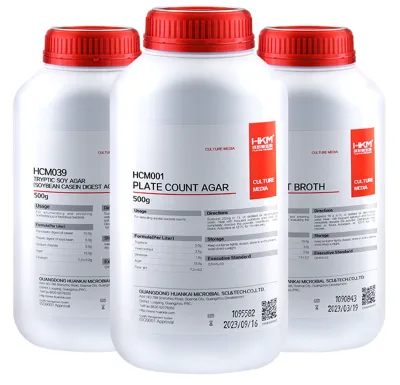


Dextrose Casein-Peptone Agar for Bacillus Cereus Enumeration (APHA Method)
$29.00 - $58.00
MOQ: 5 Pieces


Comprehensive Sourcing Guide
Strategic Sourcing Guide for Biochemical Reagent Casein Agar
Navigating the global market for biochemical reagents, specifically agar-based formulations like casein agar, requires a disciplined approach to supplier evaluation and technical verification. Buyers in the pharmaceutical, food, and scientific research sectors must distinguish between generic descriptions and verified product attributes. The following guide outlines the critical factors for sourcing these materials, grounded in observed market data and standard procurement practices. Understanding the specific physical behaviors, packaging standards, and regulatory frameworks is essential for maintaining supply chain integrity and ensuring the reliability of laboratory or industrial outputs.
Technical Specifications and Physical Attributes
The foundational step in sourcing biochemical reagents involves a rigorous analysis of the product's physical and chemical specifications. In the current market, agar-based reagents are frequently observed in a dry powder form, a state that ensures stability and ease of handling during transport. The primary material composition is identified as agar, often marketed under names such as "Agar Powder" or "Agar Agar Powder." Buyers must verify that the specific product meets the required reagent grade, typically classified as a Biochemical Reagent suitable for analytical, diagnostic, and teaching purposes.
A critical specification to validate is the gel strength and moisture content, as these parameters directly influence the performance of the agar in culture media. Market observations indicate that high-quality agar powders often adhere to standards where gel strength falls within the range of 800-1200g/cm², with moisture content capped at a maximum of 12%. These figures are not universal guarantees for every listing but serve as a benchmark for what a buyer should request from a supplier. The appearance of the reagent is typically described as milk-white, and the source is confirmed as dry powder.
Furthermore, the classification of the product as a "Fine Chemical" or "Special Reagent" suggests its intended use in precise applications. The specific usage often includes biological purposes, tissue medium preparation, and microbiological analysis. When evaluating a potential supplier, procurement teams should request a Certificate of Analysis (CoA) that explicitly confirms these physical attributes. The absence of these specific numerical ranges in a product listing should trigger a request for clarification, as generic descriptions of "agar powder" do not guarantee the performance characteristics required for sensitive biological assays.
Compliance, Certification, and Regulatory Standards
In the realm of biochemical reagents, compliance is as vital as the chemical composition itself. Suppliers operating in the international market, particularly those originating from major manufacturing hubs like Guangdong, China, are often expected to hold specific certifications to validate their quality management systems. Observed market data highlights certifications such as HACCP, ISO, and BRC as common indicators of a supplier's commitment to safety and quality. While specific standards like ISO 9001 or ISO 17025 are frequently referenced in the broader industry, buyers must verify the actual validity of these certificates for the specific product batch being sourced.
The "Reagent Grade" designation is a key compliance indicator, signaling that the product is manufactured for laboratory and industrial use rather than general consumption. For applications involving food, clinical samples, or environmental testing, the supplier must demonstrate that their production processes meet the rigorous demands of these sectors. The presence of certifications like HACCP is particularly relevant for applications in the meat and drink industries, where the reagent may be used as a thickener or culture medium.
Buyers should not assume that a supplier's general company certification automatically extends to every SKU they offer. It is imperative to cross-reference the specific product model number, such as BBWS-CM-283 or BBWS-CM-314, with the certification documents. The verification process should include checking the expiration dates of the certifications and ensuring they cover the specific manufacturing facility listed in the product details. This due diligence mitigates the risk of sourcing non-compliant materials that could invalidate research results or fail regulatory audits.
Cost Drivers and Pricing Structures
The pricing of biochemical reagents is influenced by a complex interplay of factors, including raw material costs, packaging complexity, and order volume. In the observed market, the price range for these products can vary significantly, from as low as $1 to $58 per unit, depending on the quantity and specific formulation. This wide variance underscores the importance of understanding the cost drivers before negotiating.
One of the primary cost drivers is the packaging material and method. Products are frequently packed in plastic bottles wrapped in plastic film, with capacities ranging from 500g per bottle to 10kg per bag. The carton dimensions, such as 54.534.521CM, and the total weight per carton (10kg) affect logistics costs. Suppliers offering bulk packaging, such as 25kg bags or 10kg boxes, may offer different price points compared to those selling single 250g bottles. The "Selling Units" often vary, with some listings offering single items and others requiring bulk purchases.
The Minimum Order Quantity (MOQ) is another critical factor in cost calculation. Market data shows an MOQ range from 1 to 5000 units, with a common baseline of 5 units for smaller orders. Suppliers with higher supply abilities, such as 10,000 kilograms per month, may have more flexibility in pricing for large-volume contracts. Buyers should analyze the total cost of ownership, which includes the unit price, shipping costs from ports like Guangzhou or Shenzhen, and any potential customs duties. Negotiating based on the "Customization Support" available, such as OEM/ODM services, can also influence the final price, as tailored packaging or labeling may incur additional charges.
Typical Applications and Usage Scenarios
The versatility of agar-based biochemical reagents makes them indispensable across multiple industries. The primary application areas include scientific research, health and medical diagnostics, and environmental protection. In the laboratory setting, these reagents are used as culture media for growing microorganisms, supporting tissue culture, and facilitating microscopic analysis. The specific usage is often detailed as "For Biological Purpose," "For Microbiological," or "For Tissue Medium Purpose," indicating their role in creating the necessary environment for cell growth and observation.
Beyond the laboratory, these reagents find significant use in the food and beverage industry. As a thickener and stabilizer, agar is utilized in the production of meat products and drinks. The "Specific Usage" field often highlights suitability for food samples, clinical samples, and environmental samples, reflecting the broad spectrum of testing and processing where these materials are employed. The classification as "Analytical Reagents" and "Diagnostic Reagents" further emphasizes their role in quality control and safety testing.
When sourcing for industrial applications, buyers must ensure the reagent meets the purity and consistency standards required for large-scale production. The "Application" field in product listings often includes "Industry," "Health," and "Environmental Protection," suggesting that the product is versatile enough to meet diverse regulatory and operational needs. Understanding the specific end-use is crucial for selecting the correct grade and specification, as a reagent suitable for teaching purposes may not meet the stringent requirements of clinical diagnostics.
Supplier Evaluation and Verification
Evaluating a supplier for biochemical reagents requires a multi-faceted approach that goes beyond price comparison. The "Place of Origin" is a key indicator, with many suppliers located in Guangdong, China, a region known for its chemical manufacturing capabilities. However, the location alone does not guarantee quality. Buyers should verify the "Supply Ability," which in some cases is listed as 10,000 kilograms per month, to ensure the supplier can meet demand fluctuations.
The "Port of Dispatch," typically Guangzhou or Shenzhen, is another critical logistical factor. Proximity to major shipping hubs can reduce lead times and shipping costs. Buyers should also assess the "Storage" requirements, which are often specified as 2-30℃, to ensure that the supplier has the necessary infrastructure to maintain product integrity during storage and transit. The "Shelf Life," often exceeding 12 months, is a vital metric for inventory planning.
Verification of the supplier's "Customization" capabilities is also essential. Many suppliers offer OEM/ODM support, allowing for tailored packaging and labeling. However, buyers must confirm that the customization does not compromise the product's quality or compliance status. The "Model Number" and "Product Name" should be clearly documented to avoid confusion between different grades or formulations. A reliable supplier will provide transparent documentation regarding their production processes, quality control measures, and compliance with international standards.
Quality Control and Long-Term Procurement
Maintaining consistent quality in biochemical reagents is paramount for the success of any downstream application. Quality control measures should be embedded in the procurement process, starting with the verification of the "Standard" specifications. For agar powders, standards such as 250g/bottle or 250g are common, but the critical parameters are the gel strength and moisture content. Buyers should insist on batch-specific testing results that confirm these values fall within the acceptable range, such as 800-1200g/cm² for gel strength and ≤12% for moisture.
Long-term procurement considerations involve building a relationship with a supplier who can provide consistent quality over time. The "Main Active Ingredient" must be consistently identified as Agar, and the "Appearance" should remain milk-white throughout the product's shelf life. The "Storage Method" should be clearly communicated, with "Normal" storage conditions being the baseline. Buyers should also consider the "Packaging Details," ensuring that the material, such as PP or paper, provides adequate protection against moisture and contamination.
Finally, the "Specific Usage" and "Application" fields should be reviewed periodically to ensure the product remains suitable for evolving needs. As regulations change and new applications emerge, the supplier must be able to adapt their offerings. By focusing on these quality control metrics and maintaining a proactive approach to supplier evaluation, buyers can secure a reliable supply of biochemical reagents that meet the highest standards of performance and safety.
FAQs
What is the physical form of the Biochemical Reagent Casein Agar?
The product is supplied as a dry powder. This physical behavior ensures stability and ease of handling during transport for laboratory or industrial applications.
Which certifications do the suppliers typically hold?
Suppliers often hold HACCP, ISO, and BRC certifications. These validate quality management systems for production facilities in Guangdong, China, ensuring compliance for food and medical uses.
How is the agar powder packaged for shipment?
Packaging includes plastic bottles wrapped in film or bags. Options range from 500g bottles to 10kg bags, with specific carton dimensions to optimize logistics from Guangzhou or Shenzhen ports.
Can I customize the packaging or labeling of the reagent?
Yes, customization is available with OEM and ODM support. Buyers can request tailored packaging or labeling to meet specific brand or regulatory requirements for their industry applications.
What is the minimum order quantity for this reagent?
The minimum order quantity is typically 5 units. However, the observed market range extends up to 5000 units, allowing flexibility for both small labs and large industrial buyers.
Where are the products manufactured and shipped from?
Products originate from Guangdong, China, and are dispatched from Guangzhou or Shenzhen ports. This location supports a supply ability of 10,000 kilograms per month for consistent delivery.
What are the storage requirements for the agar powder?
The product must be stored between 2-30℃ under normal conditions. Proper storage ensures the shelf life exceeds 12 months while maintaining the specified gel strength and moisture content.